GESI GIGA Batteries

System-friendly large-scale battery storage systems for the energy transition

GESI Giga Batteries - our drive

Green energy 24/7

We ensure that green energy is available around the clock (24/7), even in calm and rainy weather.

Grid stabilization

We are stabilizing the electricity grid, reducing the risks of power outages and achieving annual savings of up to 500,000 tonnes of CO₂ at up to ten locations.

Large battery storage

We use large-scale battery storage systems based on lithium iron phosphate (LFP), as these technologies are non-toxic and harmless and are integrated into a comprehensive recycling concept.

WE make GREEN ENERGY available around the clock

The economy and society need green electricity, even when the sun is not shining and the wind is not blowing.

With our large-scale battery storage systems, we are making an important contribution to the energy transition by:

THE CHALLENGES AND OPPORTUNITIES OF THE ENERGY TRANSITION ARE ENORMOUS

The energy transition and the massive expansion of renewable energies required for it are increasing the instability of the electricity grid and the risk of overloads.

This leads to considerable energy losses, which drive up the price of electricity. To counter this, Germany needs enormous storage capacities.

We already have more than 100 gigawatts of excess solar and wind capacity in the 4 to 5 hours of midday, which is lost without storage.

LARGE BATTERY STORAGE SYSTEMS (BESS) ARE AN IMPORTANT PART OF THE SOLUTION

When a lot of energy is produced, our large batteries store electricity and release it back into the grid when needed.

Thanks to connected loads in the gigawatt range, GESI Giga Batteries can supply power for several hours. In this way, they are making a significant contribution to the success of the energy transition.

Hydrogen is also a storage medium, but it is much less efficient in terms of production and shows its strengths in long-term storage.

Large-scale battery storage serves daily and short-term needs – and ensures that more green hydrogen is available where it is really needed.

LOCATIONS

Without the necessary infrastructure, large-scale battery storage projects cannot be realized. 

We therefore prefer to build in the vicinity of existing extra-high-voltage substations.

Planning and implementation are carried out in close cooperation with the local communities so that local needs and requirements are taken into account.

It is also important to GESI that the municipalities benefit as much as possible financially and structurally from the large-scale battery storage systems required. 

THE ADVANTAGES

Large-scale battery storage systems (BESS) make a significant contribution to CO2 savings. They offer high flexibility and efficiency and reduce the need for fossil-fuel peak-load power plants and gas imports.

Thanks to the more efficient use of green electricity, they have a dampening effect on electricity prices and reduce the need for additional renewable energy capacities.

GESI Giga Batteries - A POWERFUL partner

GESI is a solution partner for energy suppliers and institutional investors. We develop, plan, build and finance efficient and digitized large-scale battery storage systems.

GESI provides comprehensive support to business partners in all phases of the construction, operation and maintenance of large-scale battery energy storage systems (BESS).

GESI brings technical expertise in the installation of modern storage technology and a broad network of institutional investors.

GESI supports the marketing of flexible storage capacity and offers individual options for revenue distribution.

FAQ: FREQUENTLY ASKED QUESTIONS

GESI intends to use only LFP cells and to open up to new technologies in the future. We will explicitly not use NMC or cobalt-reduced NMC/NCA cathode materials Conflict raw materials are not contained in the batteries used by GESI: Lithium, iron and phosphate are natural minerals. No heavy metals or conflict raw materials are required in production. The VDE also classifies LFP as “non-toxic and harmless”.

Important trade income remains, jobs are preserved and created.

Independence from imports, in southern federal states: electricity price zone hedge, welfare gains through low electricity costs.

We load when there is the most (too much) supply on the market. So we automatically work in a grid-friendly way.
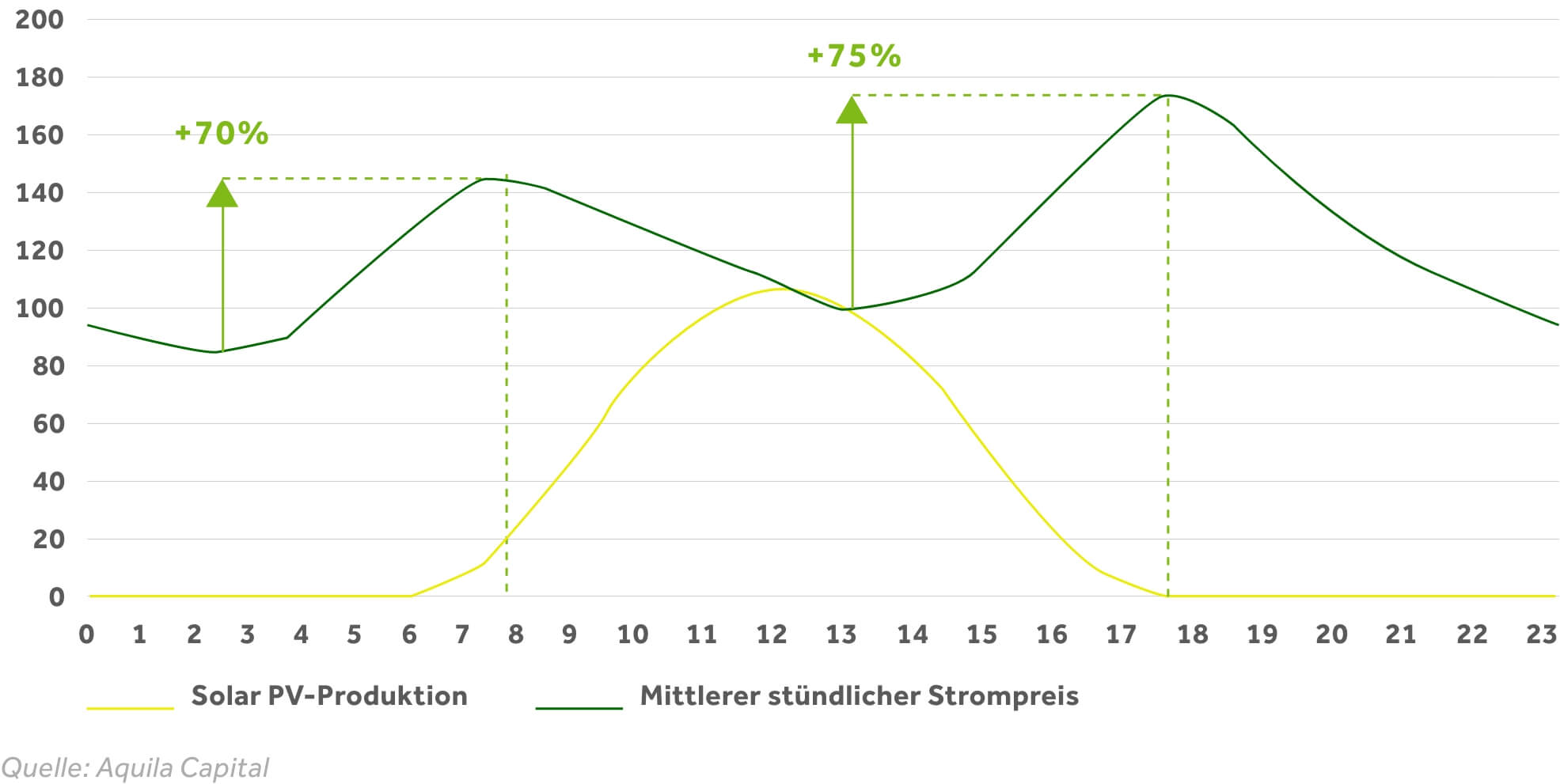
Source: Aquila Capital

The energy balance of a Li-ion cell is largely dependent on the electricity mix in the country where the battery cell is produced, as a lot of energy is required for coating and drying in particular Greenhouse gas emissions due to the energy required in production are between 61 and 106 kg Co2äg/kWh battery capacity. (realistic to worst-case comparison: BMW with 100% green electricity in the supply chain for battery cells) See:
https://www.agora-verkehrswende.de/fileadmin/Projekte/2021/Klimaneutrale-Batterieproduktion/59 climate-neutralbatteryproduction.pdf

Emissions from natural gas-fired peak-load power plants: 433 grams CO2/kWhel See:

https://www.umweltbundesamt.de/publikationen/emissionsbilanz-erneuerbarer-energietraeger-2018

141kWhel to 245kWhel + 10% losses = 155.1 to 269.5kWh of renewable energy must be saved per kWh of battery capacity in order to be better than a current gas-fired power plant in terms of energy balance

With around 365 cycles per year, it can be assumed that the battery will have a neutral or better energy balance than comparable flexibility options after just 5 – 9 months

Modern systems are now subject to strict regulations, have several safety levels and cannot be compared with standard Li-ion batteries.